
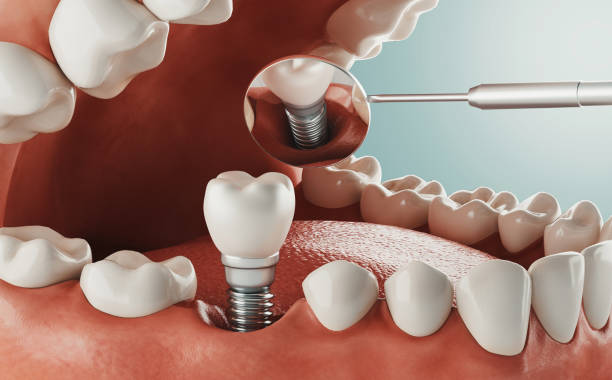
A dental implant is designed to function for many years, but the surrounding tissues still need to remain healthy for that to happen. An implant itself cannot develop a cavity, but the surrounding gums and bone can still develop inflammatory disease. If that inflammation becomes persistent and the supporting bone starts to break down, the condition may progress to peri-implantitis.
This does not mean every red or slightly tender gum around an implant is a sign of trouble, and early inflammation does not automatically mean that the implant will fail. Mild irritation often clears up on its own. But persistent bleeding, swelling, gum changes, discomfort, or mobility around an implant should be evaluated by a dental implant dentist rather than watched and waited on.
Patients with dental implants in Asheville and Clyde, NC sometimes notice these changes months or years after their original procedure. An implant dentist in Asheville, NC can determine what’s actually happening with a proper evaluation. This guide covers what peri-implantitis is, how implant dentistry approaches it differently from ordinary healing, why bone loss makes it more serious, and when to seek care.
Peri-implantitis is an inflammatory condition that affects the tissues surrounding an osseointegrated dental implant and is associated with progressive loss of the supporting bone. It’s sometimes described by patients as a dental implant infection, though the more accurate clinical term is peri-implant disease. It develops in stages, and understanding those stages helps make sense of why early attention matters.
The progression generally looks like this:
According to the American Academy of Periodontology, peri-implant mucositis can often be successfully treated and reversed when caught early, while peri-implantitis involves bone loss and typically needs more involved treatment. That distinction is why dentists watch for early signs rather than waiting for symptoms to become obvious.
Not every case of implant inflammation means the implant is failing. Early inflammation is common and often manageable when addressed promptly.
Some soreness, mild swelling, or light bleeding is a normal part of the dental implant healing process in the days and weeks after surgery. That kind of temporary irritation is expected and typically resolves on its own.
Peri-implantitis is different. It develops around an implant that has already healed and settled into function, sometimes years later, and it should never be diagnosed from symptoms alone.
A dental implant evaluation typically weighs several factors together: the condition of the surrounding tissue, probing depths, radiographic bone levels, implant stability, plaque accumulation, and the design of the crown or restoration. Together, these give a clearer picture of implant health than any single symptom can.
Because these two terms sound similar, patients often confuse them. Here is a simple, patient-friendly comparison.
| Feature | Peri-Implant Mucositis | Peri-Implantitis |
|---|---|---|
| Where It Affects the Implant | Soft tissue only | Soft tissue and supporting bone |
| Bleeding or Redness | May be present | May be present |
| Bone Loss | Not present | Present and progressive |
| Outlook With Early Care | Often manageable | Requires more involved treatment |
Peri-implant mucositis is gum inflammation around the implant without bone involvement. Peri-implantitis includes that same peri-implant inflammation, plus measurable, ongoing peri-implant bone loss. Recognizing which stage applies to you is exactly why a professional evaluation matters more than self-diagnosis.
Symptoms of peri-implantitis vary from person to person, and some cases progress with very little discomfort. That is part of why ongoing monitoring matters more than waiting for pain to show up.
Signs that may point toward peri-implant disease include:
One important clarification: a loose crown or screw does not automatically mean peri-implantitis. Different parts of an implant restoration can loosen independently of the implant itself, which is covered in more detail below.
Bleeding during brushing or a professional exam often signals inflammation. The typical chain runs from plaque buildup to soft-tissue irritation to bleeding gums around the implant when the tissue is touched.
Occasional light bleeding is not automatically peri-implantitis. But swollen gums around a dental implant that don’t settle down, or bleeding that keeps happening, is a reasonable prompt to schedule a checkup and protect your implant gum health.
Recession around an implant can expose more of the crown, abutment, or other components previously covered by gum tissue. Contributing factors include the thickness of the surrounding tissue, underlying bone changes, implant position, ongoing inflammation, and the contours of the restoration itself.
The relationship between gum health and implant success runs deep, and this practice’s article on why healthy gum tissue matters for dental implant success offers more context if you are noticing recession.
A bad taste that will not go away, occasional drainage, or ongoing tenderness near an implant is worth mentioning to your dentist. These symptoms can point to ongoing inflammation, even when nothing looks dramatic on the surface. Visible pus is not required for peri-implantitis to be present, which is why persistent symptoms deserve a look even when mild.
A feeling of looseness can come from a few different places: the crown itself, the abutment screw connecting it to the implant, or, less commonly, the implant fixture in the bone. Only a professional assessment can determine which one is actually moving, since what feels like a loose dental implant is often just the crown or a restoration component.
This distinction matters for dental implant stability overall. A loose crown is often a straightforward restorative fix, while a mobile implant fixture points to a more significant concern involving the surrounding bone. If your implant crown feels loose, it’s worth having the implant restoration checked rather than guessing which part is affected. For a closer look at how these pieces fit together, see this overview of how implant crowns attach to the abutment and screw.
An implant depends on the surrounding bone for long-term stability. Inflammation limited to soft tissue is one thing. Inflammation that progresses into the supporting bone of a dental implant is different, because that bone is what keeps the implant anchored under everyday chewing forces.
The pattern runs from inflammation, to breakdown of supporting tissue, to progressive dental implant bone loss, to reduced implant support. Bone loss around an implant, rather than soft-tissue irritation alone, is the feature that defines peri-implantitis and sets it apart from milder, more reversible inflammation. Because dental implant stability depends on that bone, protecting implant health means paying attention once bone involvement is suspected, not just when the gums look irritated.
A healthy implant is not simply sitting in the jaw. It fuses to the surrounding bone through a process called osseointegration, where bone grows into close contact with the implant surface. That integration is what lets the implant handle biting and chewing forces the way a natural tooth root would, and it is exactly what peri-implantitis works against as bone loss progresses. This practice’s article on why osseointegration is the key to dental implant success explains the process in more depth.
Not all bone loss looks the same. The amount, pattern, and speed of progression all factor into how much implant bone support remains and how serious the situation is. More advanced or faster-moving bone loss can make preserving the implant more difficult and can raise dental implant failure risk over time, which is part of why dentists track bone levels over time rather than judging from a single visit. Bone quality and quantity matter here too for long-term implant health, as covered in this practice’s article on how bone density affects dental implant success.
Peri-implantitis rarely comes down to a single cause. It is generally understood as a multifactorial condition, meaning bacterial plaque accumulation combines with a mix of patient-related, implant-related, and restoration-related factors to increase risk. Poor maintenance, certain tissue conditions, and the design of the restoration can all play a role, and in some cases excessive biting force, or occlusal overload, may act as a modifying factor, though it is not considered a primary cause of the disease on its own.
An implant post and crown cannot develop a cavity, since they are not made of enamel or dentin. But the tissue surrounding an implant is still living gum tissue, and it responds to bacteria around the implant the same way natural gum tissue does. Left undisturbed, plaque buildup can lead to soft-tissue inflammation, or peri-implant mucositis, which can progress further in patients with certain risk factors. Good implant hygiene is one of the simplest ways to protect peri-implant health over the long term.
Patients with a history of periodontal disease often benefit from closer monitoring around their implants. This does not mean everyone with a gum disease history will develop peri-implantitis. This practice’s article on why gum disease must be treated before dental implants covers this connection in more depth. Your dentist will weigh this history when deciding how often to check your implants and how closely to watch for early changes.
Smoking is one of the more established dental implant risk factors, associated with reduced healing capacity and a higher rate of complications. According to the FDA’s overview of how tobacco use affects oral health, smoking can cause periodontitis and interfere with healing in the tissues that support both natural teeth and implants, which can affect implant longevity over time. This is general health information rather than a personalized recommendation. If you smoke and have concerns about your implant, that is worth discussing directly with your dentist.
The way an implant restoration is designed matters more than most patients expect. Bulky crown contours, deep margins, and hard-to-reach spaces can make daily plaque removal more difficult, and leftover cement from a cement-retained crown can irritate surrounding tissue if it is not fully removed. Because crown design affects both function and cleaning around a dental implant long-term, this practice’s article on how long implant crowns last compared to the implant itself offers more on how these restorative choices affect an implant’s lifespan.
Diagnosing peri-implantitis means combining several pieces of clinical and radiographic information rather than relying on any single finding. A dental implant evaluation typically includes a review of your symptom history, a tissue exam, probing around the implant, an assessment for bleeding or drainage, radiographs, mobility testing, a hygiene assessment, and a look at the crown, abutment, and overall restoration. Dr. Highsmith’s Asheville practice combines all of these findings rather than relying on any single one to reach a diagnosis.
Bone levels are most meaningful when compared against earlier records. A single X-ray shows a snapshot, but comparing it to prior images reveals whether bone levels are stable or changing, which is how dental implant monitoring identifies progressive bone loss rather than a level that simply looks a certain way in isolation.
Mobility testing matters because crown mobility and implant fixture mobility are not the same thing. Careful clinical testing helps isolate which component is moving, which determines whether the issue is a simple restorative repair or something involving the implant’s bone support.
Treatment depends on several factors working together: how advanced the condition is, the implant’s position, the amount and pattern of bone loss, the restoration design, the condition of the tissue, and any risk factors you may have.
Treatment goals generally focus on reducing bacterial load, controlling inflammation, improving cleanability, treating the implant surface directly, and adjusting or replacing the restoration when needed. In select cases, regenerative or resective procedures may be considered. Treatment cannot promise that bone will fully rebuild, but many cases can be managed effectively with the right approach.
Catching peri-implant mucositis, or early peri-implant inflammation, before it progresses to bone loss generally makes peri-implant mucositis treatment simpler and more predictable. This is one of the strongest reasons to have persistent symptoms checked sooner rather than later, and it’s part of why ongoing implant maintenance plays such a large role in long-term dental implant health.
In more advanced cases, deeper tissue defects or a contaminated implant surface may require surgical access to properly clean and treat the area. The specifics are decided case by case and go beyond what home care alone can address.
In some cases, severe bone loss, an unfavorable implant position, significant mobility, or other complications can make preserving the implant unpredictable, and removal may become the more reliable long-term option. This outcome is not common, and most patients who seek evaluation early do not reach this point.
Prevention centers on consistent daily care paired with regular professional monitoring, addressing both the plaque that contributes to inflammation and the changes that are easiest to catch with professional tools. Patients with dental implants in Asheville, NC benefit most when daily habits and professional implant maintenance work together, rather than relying on either one alone.
Practical steps include:
Your dentist can tailor this kind of follow-up to your specific risk factors, rather than applying a one-size-fits-all schedule.
This contrast is worth repeating because it surprises many patients: an implant cannot develop a cavity, but the tissue around it can absolutely become diseased. That is why clean dental implants depend on more than the implant material itself. Dental implant hygiene is not optional just because the implant is artificial. Daily brushing around implants protects the peri-implant tissue health that keeps everything in place.
Professional visits let your dentist monitor tissue health, remove plaque you cannot reach at home, assess your bite, evaluate the restoration, and take radiographs when appropriate. How often you need these visits depends on your individual risk factors, so there is no single interval that fits every patient.
Yes. Full-arch dental implants in Asheville, NC, and full-mouth dental implants rely on multiple implants working together, and each one is still surrounded by living gum and bone tissue that can develop peri-implant disease. If inflammation or bone loss develops around one implant in a full-arch or hybrid dental implant case, it typically needs to be evaluated in the context of the entire implant-supported restoration, including hygiene access, load distribution, implant position, and overall tissue condition.
Patients with a full-arch solution like Secure Smile benefit from the same daily care and professional monitoring outlined above, since the underlying biology does not change just because more teeth are involved.
Common signs include persistent bleeding, swelling, tenderness, drainage, gum recession, or noticeable changes around the implant. Since these symptoms can have more than one cause, a professional exam is the only way to confirm what’s happening.
In many cases, yes. Whether it can be preserved depends on the severity of the disease, remaining bone support, implant stability, and other individual factors your dentist will assess.
No. Inflammation and bone loss can sometimes progress with very little discomfort, which is exactly why routine monitoring matters more than relying on pain as a warning sign.
In select cases, regenerative procedures may help rebuild lost bone. Predictable regeneration is not possible in every situation, and outcomes vary with the extent of the damage.
Advanced, progressive bone loss can compromise the support an implant needs to function, and in some cases this can ultimately contribute to failure, which is part of why early treatment matters.
Yes. Peri-implant disease can develop well after an implant has functioned normally for years, which is why continued maintenance remains important long after healing is complete.
Yes. Even though the visible teeth in a full-arch restoration are artificial, the implants supporting them are still surrounded by living gum and bone tissue that can develop the same inflammatory changes seen around single implants.
If you have noticed bleeding, swelling, gum recession, a persistent bad taste, discomfort, or any mobility around a dental implant, it is worth having it evaluated rather than waiting to see if it resolves on its own. Dr. John Highsmith provides dental implant evaluations for patients with dental implants in Asheville, NC, and dental implants in Clyde, NC 28721, along with the surrounding Western North Carolina area, at his Clyde office.
As an implant dentist in Asheville, Dr. Highsmith brings decades of implant dentistry experience to every evaluation. An early evaluation gives you and your dentist the clearest picture of what is happening and the most options for addressing it. If something feels different about your implant, contact the office to schedule an evaluation and get a clear answer about what you’re experiencing.
