Full-arch implant teeth look natural when their shape, size, position, and color are planned around your face, lips, and gums. Natural-looking full-arch dental implants come from designing the whole smile, not just choosing a tooth shade. Surface texture and the way the teeth meet the gums matter too.
Many patients share the same worries before treatment. They wonder whether the new teeth will look too large or resemble dentures. Some worry the gums will look artificial. Others want to know if the teeth can fit their facial features and still look natural when they talk.
This guide explains how full-arch smile design addresses each concern. Patients from Asheville and Western North Carolina can discuss full-arch dental implants and their restorative goals at Highsmith Dental in Clyde. Results depend on each person’s anatomy, so no single look fits everyone.
Natural-looking implant teeth combine several details at once. These include tooth size, shape, color, surface texture, and how the teeth sit within the gums and lips. No single feature creates a natural smile. Each one supports the others, and small differences between teeth help the smile look real.
Natural teeth vary slightly in shape, edge contour, translucency, and the way they reflect light. These small differences give a smile its character.
When every replacement tooth has the same size, color, and shine, the smile can look artificial. A natural design includes subtle variation from tooth to tooth.
Tooth width, length, and outline all influence how a smile looks. The two front teeth, called central incisors, are usually the largest. The lateral incisors beside them are smaller, and the canines are more pointed.
These proportions should fit your face and the space available for the bridge.
Color is a common concern for people considering cosmetic dental implants. It includes shade, brightness, and translucency, and surface details change how it looks in different light.
The whitest available shade does not automatically look natural. Very bright teeth can stand out against skin tone and lips. The goal is a shade that looks healthy and fits your features.
The gums and lips act like a frame around the teeth. Gum contours affect how long the teeth appear, and lip position decides how much of the teeth and gums show.
Your smile line is the curve your upper lip makes when you smile. Gingival display is how much gum shows above the teeth.
Full-arch smile design starts with the face, not the teeth. Dentists study facial landmarks, lip shape, and how your lips move when you talk and smile. Those details guide tooth position, length, and smile width. The goal is a smile that fits you.
Dr. Highsmith is an AACD-accredited dentist, one of only five accredited members of the American Academy of Cosmetic Dentistry in North Carolina. He brings that background in cosmetic dentistry and smile design to full-arch cases.
The dental midline is the line between your two upper front teeth. Dentists compare it with facial landmarks, such as the center of the nose, lips, and chin.
A well-placed midline helps the smile look balanced. Still, most faces have small asymmetries. Perfect alignment is not always necessary or possible, and a slight difference can look natural.
Lips change position constantly. At rest, a small amount of the upper teeth may show. When you speak or smile broadly, more teeth and sometimes gums become visible.
A single photo captures only one moment, so dentists also watch how your lips move as you talk and smile.
The incisal edge is the biting edge of a front tooth. Its position affects how long the teeth look and how they relate to the lower lip.
Teeth that are too short may disappear behind the lip. Teeth that are too long can look oversized. The right length depends on lip position, tooth proportions, and speech.
The smile arc is the relationship between the edges of the upper front teeth and the curve of the lower lip when you smile.
When the tooth edges gently follow that lip curve, the smile often looks harmonious. Still, people perceive smile arcs differently, so the right curve depends on your face and lips.
Buccal corridors are the small, darker spaces between the back teeth and the corners of the mouth when you smile. How many back teeth show affects how wide the smile looks.
There is no single ideal smile width. A review of research on how people judge smile attractiveness found mixed results on buccal corridors. Studies using digitally altered photos often rated large corridors as less attractive. However, studies of real smiles found that corridor size alone did not seem to affect attractiveness. Smile width should suit your face rather than follow one rule.
A full-arch bridge is designed as one coordinated set of teeth, not a row of separate crowns. Each tooth’s size and shape relate to its neighbors. Together, they create a smile that looks balanced, individual, and believable.
The central incisors are the most visible teeth in most smiles. Their width, length, and shape set the starting point for the rest of the design.
Other teeth are often sized in relation to them. If the centrals look out of proportion, the whole smile can look unbalanced.
Lateral incisors are usually smaller and softer in shape than the centrals. Canines are longer and more pointed, which helps define the corners of the smile.
These differences keep the front teeth from looking cloned. Subtle variation in shape and position adds individuality.
Premolars and molars show at the sides of a wide smile, so their position affects how full and wide the smile looks.
They also handle most of the chewing and need proper implant support. Their placement balances appearance with the bite and the bridge’s structure.
Incisal embrasures are the small V-shaped notches between the biting edges of front teeth. In natural smiles, these notches often grow slightly larger from the center toward the canines.
Without them, the front teeth can look like one solid block. Thoughtful embrasures help each tooth read as its own.
Many full-arch patients have lost gum and bone along with their teeth. The bridge may need to replace some of that missing tissue visually. Thoughtful gum design keeps the teeth at natural proportions and helps the restoration blend into the smile.
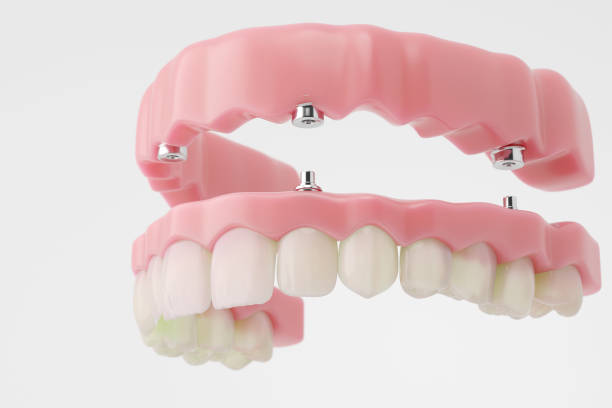
Prosthetic gingiva is gum-colored material built into some full-arch bridges. It sits next to the teeth, where natural gum tissue would normally show. Its purpose is visual. It can help reproduce the look of gum tissue lost after tooth loss.
After teeth are lost, the jaw ridge often shrinks over time. The gum tissue covering it can shrink too.
This increases the distance between the ridge and where the teeth should sit. The bridge sometimes needs added volume to make up for that lost tissue.
Filling the extra space with tooth material alone can make the teeth look very long. Prosthetic gingiva can take up part of that space instead.
The teeth can then keep natural proportions. Your smile line also matters, because it decides how much of this gum material shows. Together, these choices help many full-arch bridges avoid an oversized look.
The point where artificial gum material meets your own tissue is called the transition line. If it shows when you smile, it can look unnatural.
Many designs aim to keep this line hidden under the upper lip, even during a high smile. Your own gum tissue around dental implants also needs to stay healthy at this junction.
Natural gums are not one flat shade of pink. Gum-colored materials can include shade variation, contours, and surface finish that mimic real tissue.
Not every zirconia bridge uses the same gum design. Some use gum-colored zirconia, while others use different materials or need little gum replacement. Our guide to fixed hybrid dental implant bridges explains these options.
Zirconia is a strong dental ceramic that can be shaded and characterized to resemble natural teeth. It gives the restorative team a durable material to work with. Even so, the final look also depends on design, finishing, and clinical skill.
Zirconia is a tooth-colored ceramic used where both strength and appearance matter. A review of modern dental zirconia found that translucent zirconia has shown promising results and high survival rates. It describes the material as suited to cases that need both strength and esthetics.
The review also notes a tradeoff. Making zirconia more translucent can reduce its strength, and newer formulas still need longer-term study. That balance matters in fixed full-arch bridges, where zirconia is often used.
Several visual qualities work together:
Natural enamel has fine ridges and subtle texture. These details scatter light in small, uneven ways. A perfectly flat, uniformly glossy surface reflects light more like a mirror. That can make teeth look plastic. Fine surface characterization helps restorations catch light more like real teeth.
Highsmith Dental uses Prettau Zirconia for its final Secure Smile teeth and describes newer zirconia formulas as allowing good tooth coloring and translucency.
Even so, design, shade selection, and finishing still shape how natural the final smile looks.
Yes. Any material can look artificial if the shade is too bright or every tooth matches exactly.
That is why shade selection and characterization matter. Your preferences count, and the restorative team helps balance them with your skin tone, lips, and facial features.
Teeth and the ridge beneath them help support the lips and lower face. After tooth loss, that support can decrease. A full-arch bridge can restore some support through tooth position and contours, but changes vary from person to person.
When teeth are missing, the lips lose some of the structure behind them. As the jaw ridge shrinks, the area around the mouth may look less supported.
How much this happens varies. It depends on how long teeth have been missing and on individual anatomy.
The bridge places teeth where they can support the lips again. Its contours near the lips also affect how full the area looks.
Clinicians plan this support within anatomical and functional limits. Too much bulk can feel uncomfortable or look unnatural, so balance matters.
Vertical dimension describes how far apart your upper and lower jaws sit when your teeth come together. It influences facial proportions and how the bite feels.
Restorative space is the room available for the bridge between the jaws. Both affect how long the teeth can be and how the final bridge is shaped.
A smile also has to work every day. Esthetic choices must fit with a healthy bite, clear speech, easy cleaning, and enough material strength.
Sometimes a small esthetic compromise protects long-term function. A good plan explains these tradeoffs clearly.
Temporary teeth let you and your dental team see how a planned design looks and feels before the final bridge is made. They can show what works and what may need adjusting. The process varies by patient and treatment plan.
With Secure Smile, lab-made temporary teeth are seated the day after implant placement, and the final Prettau Zirconia teeth are fitted after the implants heal, in about six to eight months.
Temporary teeth can help assess:
Temporary bridges are usually made from different materials with simpler fabrication, since they are designed for the healing period. Because of this, they may differ in color, texture, and detail from the final zirconia teeth.
Your comments about appearance, comfort, and speech can be valuable. If the teeth look too long or a sound seems off, tell your dentist.
Some changes can be considered for the final bridge. Others may be limited by your bite, implant positions, or material requirements.
The final bridge must fit the implants already in place and the space available. Teeth cannot always move to any position you might prefer. That is why full-arch implant distribution shapes what the final design can and cannot do.
A natural-looking bridge also needs to feel and work naturally. Tooth position and bridge thickness affect how you speak and how the bridge feels against your lips and tongue. An adjustment period is common, and small changes may help.
Speech depends on the tongue, lips, and teeth working together. “F” and “v” sounds form when the lower lip touches the upper front teeth. “S” sounds depend on tongue position and the space behind the front teeth.
If tooth position changes, some sounds may sound or feel different at first. Results vary between patients.
A full-arch bridge may feel different from natural teeth, especially at first. Thicker areas or unfamiliar contours can take time to get used to.
If something still feels bulky after you adapt, your dentist can evaluate whether an adjustment may help.
Some esthetic contours make cleaning harder. Bulky shapes or undersides that leave no room for floss can trap food and block cleaning tools.
A beautiful bridge that cannot be cleaned well may lead to long-term problems. Good design balances appearance with practical hygiene access.
Fixed implant bridges and removable dentures are supported differently, so they are often shaped differently. These design differences can affect how each one looks. A natural appearance still depends on individual design, anatomy, and careful execution.
Removable dentures rest on the gums and often rely on broad coverage for stability. Fixed implant bridges are held in place by implants instead.
That difference changes how the prosthesis can be shaped. It does not mean a fixed bridge always looks more natural.
Often, yes. Individualized tooth shape, shade, position, and gum design can help avoid a uniform, denture-like look.
Results still depend on your anatomy and on how carefully the bridge is designed and made.
No. The need for prosthetic gingiva depends on how much tissue was lost, the bridge design, and your esthetic needs. Some patients need little or none, while others benefit from more.
A consultation is the best time to share what natural means to you. Talk about tooth shape, color, and photos you like. Ask what your bone and implant positions allow, and how the temporary and final teeth will be reviewed.
Try to describe what looks natural to you rather than asking for “perfect teeth.” Do you prefer softer or squarer shapes? Do you want a brighter shade or a more subtle one?
These details help your dentist design a smile that feels like yours.
Photos of your past smile, or smiles you admire, can help communicate preferences. Features you like in your current teeth may also guide the design.
The practice’s smile gallery shows examples of real results. Photos help guide planning, but they cannot guarantee an identical outcome.
Your bone, gums, implant positions, and the space available for the bridge all set limits on the design. At Highsmith Dental, 3D implant planning with an in-office CT scanner helps show what your anatomy allows.
Ask how these limits may affect tooth length, gum design, and smile width.
Ask when temporary teeth will be placed and how they will be reviewed. Find out when you can share feedback before the final bridge is made.
Yes, they can look very natural when tooth shape, color, position, and gum design are planned around your face. Results vary based on anatomy, tissue loss, and design choices, so no outcome is guaranteed.
It depends on your smile line, anatomy, and bridge design. A well-planned bridge can blend in with your features, but no result can be guaranteed to be undetectable.
Yes, you can share your shade preferences. Your dentist will discuss how different shades suit your skin tone, lips, and facial features, and what the restorative material can achieve. The final choice balances your goals with a natural appearance.
Zirconia is used for the replacement teeth, not necessarily the implants in the bone. With careful shading, translucency, and surface texture, zirconia teeth can look natural. Design and finishing matter as much as the material.
This often happens when bone and gum loss leave a large gap between the ridge and the ideal tooth edge. Without enough gum representation, the teeth fill that space and look long. A high smile line can make this more visible. Prosthetic gingiva and careful proportions can help.
They can often recreate the look of lost gum tissue with gum-colored material. This improves appearance, but it does not regrow natural gum tissue. Your own gums still need regular care.
They may. Replacing missing teeth and restoring support can affect how your lips and lower face look. The extent varies with bone loss, anatomy, and bridge design.
Yes. Temporary teeth let you and your dentist assess tooth display, speech, bite, and comfort. Feedback from this stage can help guide the final bridge, within clinical and technical limits.
They can. Fixed bridges and removable implant-supported dentures attach differently, which affects their contours. Appearance still depends on design and anatomy, and either can look natural when carefully planned.
For patients in Asheville, NC, Secure Smile planning starts with a consultation and a 3D CT scan of the jaw. The scan results are used for virtual implant placement on a 3D image of the bone. Temporary teeth are placed the day after surgery, and final Prettau Zirconia teeth are fitted after healing.
A natural-looking smile starts with a plan built around your face, your gums, and your preferences. No two smiles should look exactly alike.
At Highsmith Dental, Dr. John Highsmith helps patients from Asheville and Western North Carolina explore Secure Smile full-arch treatment through personalized smile design. During a consultation at our office in Clyde, NC 28721, you can share your esthetic goals and learn how your anatomy shapes your options. Regular checkups and home care help protect your new smile over time.
