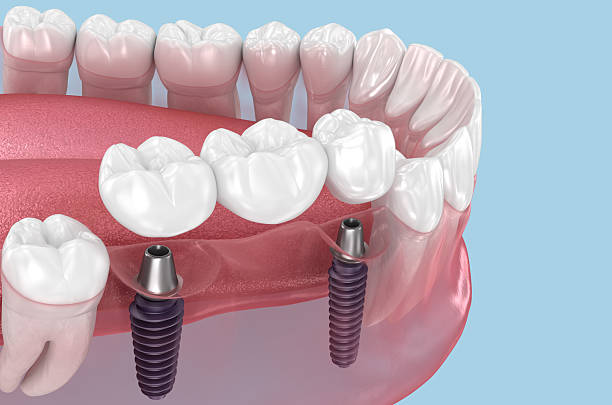
A fixed hybrid dental implant bridge is a full set of replacement teeth anchored to implants in the jawbone. It replaces an entire upper or lower arch as one connected piece. Unlike a conventional denture, it stays in place instead of coming out at night.
“Hybrid” covers several designs. Some bridges use a metal framework with acrylic or composite teeth. Others are made mostly or entirely from zirconia, a strong ceramic. The material affects how the bridge looks, wears, and is maintained.
At Highsmith Dental in Clyde, Dr. John Highsmith offers Secure Smile full-arch dental implants for patients from Asheville and Western North Carolina. Secure Smile is the practice’s own fixed full-arch approach, finished with a Prettau Zirconia bridge.
A traditional denture rests on the gums and relies on fit, suction, or adhesive. A fixed hybrid bridge attaches to dental implants, so the implants carry most of the chewing load. That support change is why the bridge feels more stable.
For patients considering fixed hybrid dental implants in Asheville, NC, this difference shapes every other part of treatment.
Several implants anchor one bridge that replaces the whole arch. The bridge works as a single unit, not a row of separate implant crowns, so the implants share the work.
The number and position of implants depend on your bone, bite, and planned restoration. Our guide to how many implants support a full arch explains those choices.
“Fixed” means you do not take the bridge out yourself. Most fixed bridges are screw-retained, held by small screws to the implant connections.
Your dentist can often remove a screw-retained bridge for professional maintenance or repair.
Because implants hold the bridge firmly, it moves far less than a removable denture. Many patients find chewing and speaking feel more natural.
Adjustment still takes time. Bite design, opposing teeth, and personal adaptation all play a role. Early healing calls for softer foods, so a wider diet returns in stages.
Often, yes. After tooth loss, the jawbone and gums shrink. Many full-arch bridges include a pink section called prosthetic gingiva, or artificial gum tissue.
How much is needed depends on your bone loss, smile line, and bridge design. Some patients need very little.
A fixed hybrid dental implant bridge is built in layers. Implants sit in the bone, abutments connect to them, screws secure the bridge, and the bridge carries the visible teeth. Each layer has a separate job, and exact parts vary by system and design.
| Component | Where It Sits | What It Does |
|---|---|---|
| Implant Fixture | Inside the jawbone | Acts as an artificial root |
| Multi-Unit Abutment | On each implant, near the gum line | Creates a connection point and can correct implant angles |
| Prosthetic Screw | Through the bridge into each abutment | Holds the bridge securely |
| Framework and Teeth | Above the gums | Forms the structure and visible teeth |
| Tissue-Facing Surface | Underside of the bridge | Affects comfort and cleaning access |
Implant fixtures are small posts, usually titanium, placed in the jawbone. Over several months, bone bonds to their surface through osseointegration.
That bond provides long-term support. Patients can read more about how implants fuse with the jawbone and why healing comes before full chewing function.
Most full-arch restorations use multi-unit abutments. These connectors attach to the implants and give the bridge consistent connection points near the gum line.
Angled versions can help align implants placed at different angles, such as tilted-back implants. The specific components depend on the implant system.
Small prosthetic screws pass through the bridge into each abutment. The screw openings are then sealed with tooth-colored material.
Secure attachment is not permanent bonding. Because the bridge is screwed in rather than cemented, your dentist can usually retrieve it for maintenance or repair.
The framework is the structural body of the bridge. In a traditional metal-acrylic hybrid, a metal bar supports acrylic teeth and pink acrylic gums.
Many zirconia bridges work differently. The zirconia forms both the structure and the teeth, with no separate metal bar.
The underside of the bridge rests against your gums. Its shape affects comfort and how easily you can clean beneath it.
A bridge can look natural but still trap food if it is not contoured for cleaning. A consensus report from the American Academy of Periodontology and the Academy of Osseointegration examined how prosthetic design affects long-term implant health.
The two main material groups are metal-acrylic hybrids and zirconia bridges. Each has different strengths, wear patterns, and repair options. No material is right for everyone. The best choice depends on your bite, restorative space, appearance goals, and treatment plan.
Patients exploring full-arch dental implants in Clyde, NC, often ask about materials first, since the bridge is what they see daily.
A metal-acrylic hybrid uses a metal framework, often titanium, covered with acrylic teeth and gums. This long-established design remains a reliable option for many patients.
Possible advantages include easier repairs and lower material cost. Acrylic is also softer, which can be gentler on opposing teeth. Possible drawbacks include wear, staining, and chipped teeth over time, depending on design and care.
Zirconia is a high-strength ceramic used for definitive full-arch restorations. A monolithic zirconia bridge is milled from one solid block. Key traits include:
A systematic review of full-arch zirconia restorations found high survival and few complications over about four years. The authors noted that long-term evidence is still limited. Zirconia can still chip, fracture, or need repair.
Prettau Zirconia is a specific zirconia brand made by Zirkonzahn. It is not a general name for every zirconia bridge. It is designed for full-arch work, balancing strength and a natural appearance.
Dr. Highsmith uses Prettau Zirconia for the final bridge in Secure Smile cases, citing its durability and esthetics. Results still depend on planning, fit, bite, and care.
The material must suit the whole restorative design. Dentists consider:
A fixed hybrid dental implant bridge is a full set of fixed implant teeth anchored in the jawbone. The dentist decides where the replacement teeth should sit, then chooses implant positions to support them. This restoration-driven approach helps the bridge fit, function, and look right.
A cone-beam CT scan shows the height, width, and shape of your jawbone. For a full-arch bridge, it maps where implants can support the whole arch.
Highsmith Dental uses in-office 3D imaging for dental implants. The scan also shows the sinus and nerves, which helps the team plan safe implant sites.
The bridge needs support spread across the jaw. Implants placed too close together can leave long sections with little support.
Dentists weigh implant spread, angles, and how far the bridge extends past the last implant. Our guide to implant distribution for full-arch stability covers this in depth.
Restorative space is the vertical room between the jawbone and the opposing teeth. It must fit the abutments, bridge material, and teeth.
Too little space can make the bridge thinner and weaker, and harder to clean. The dentist may adjust bone levels or bridge design to create room.
The final teeth must suit your face, not just your jaw. Dentists evaluate lip support, how much tooth shows when you smile, and how your teeth meet.
Tooth proportions and speech matter too. Sounds such as “f” and “s” depend on tooth position.
Treatment usually moves through five stages: consultation, implant placement, temporary teeth, the final bridge, and follow-up. The prosthetic stages take the most time, since the final bridge is designed and refined after the implants heal.
The first visit determines whether a fixed full-arch bridge suits you. The dentist reviews your remaining teeth, bone support, gum health, and medical history. You will also discuss your goals for appearance, comfort, and function.
Implants are placed in planned positions, often after removing failing teeth. Each implant needs enough initial stability to support temporary teeth. If stability is not sufficient, the dentist may wait before attaching teeth. Immediate loading is possible in many cases, but not for every patient.
A provisional full-arch bridge is a temporary set of fixed teeth worn while the implants integrate. It lets the team test your bite, speech, and appearance.
For Secure Smile, the practice’s described protocol is to seat lab-made temporary teeth the day after surgery, when clinically suitable.
After healing, the team records exact implant positions with impressions or digital scans. They also register your bite and review what worked with the temporary teeth.
A dental laboratory then fabricates the definitive bridge. At fitting, the dentist checks fit, bite, comfort, and appearance before securing it.
Follow-up visits review your bite, comfort, speech, and cleaning access after delivery. Small adjustments are normal as your mouth adapts, and periodic maintenance continues over the years.
A fixed hybrid bridge stays stable because several implants share the load through one rigid restoration. An accurate fit and a balanced bite keep forces spread evenly. Problems with either can stress the implants, screws, or bridge.
Because the bridge is connected, the implants work as a team. If one implant develops a problem, the effect depends on the design and the condition of the others. A bridge should not be expected to keep working normally if an implant fails.
Even bite contacts spread pressure, while heavy contacts in one area concentrate it. Grinding and clenching add stress and can speed wear or loosen screws.
The opposing teeth also matter. Learn more about how bite forces affect dental implants.
Passive fit means the bridge seats onto all its connection points without being forced. Think of a lid that drops onto a jar instead of one you must press down.
A bridge that does not fit passively can strain screws and implants. Accurate records, careful lab work, and clinical checks help prevent that.
A well-planned fixed hybrid bridge can look very natural. Tooth shape, size, color, and gum contours are designed around your face. The goal is a smile that suits you, not simply the whitest or most uniform teeth.
Natural teeth vary slightly in shape, length, and shade. A convincing bridge reflects that. The dentist considers your facial features, lip line, and age, since very white, perfectly even teeth can look artificial.
Prosthetic gingiva replaces volume lost when bone and gums shrink. It keeps teeth from looking overly long. Not every bridge needs the same amount, and some need almost none.
Lab technicians can add shading, translucency, and surface texture to zirconia, helping it reflect light like enamel. Results depend on the material, lab skill, and design. A separate guide explains how natural-looking full-arch implant teeth are planned.
You do not remove a fixed bridge at home, but it still needs daily cleaning. Plaque collects around the implants and under the bridge. Regular professional visits check the gums, implants, and bridge components to catch problems early.
Your dental team will show you which tools suit your bridge. Common options include:
No single product is required for everyone.
Replacement teeth cannot get cavities, but the tissue around implants can become inflamed. Plaque buildup can lead to inflammation around dental implants.
Early signs include redness, swelling, or bleeding. If inflammation progresses, it can affect the supporting bone.
A maintenance visit may include:
Not every visit requires removing the bridge.
Often, yes. Options depend on the material, type of damage, implant health, and bridge design. Repairing or replacing the bridge is separate from replacing implants. Healthy implants can often support a repaired or new bridge.
These options differ in support and removability. A fixed hybrid bridge stays in. An implant overdenture snaps onto implants but comes out. A traditional denture rests on the gums and comes out daily. Each suits different needs.
| Feature | Fixed Hybrid Bridge | Implant Overdenture | Conventional Denture |
|---|---|---|---|
| Primary Support | Dental implants | Implants plus tissue, depending on design | Oral tissues |
| Patient Removes Nightly | Generally no | Yes | Yes |
| Retention | Fixed prosthetic connections | Removable attachments | Fit, suction, sometimes adhesive |
| Cleaning | Around and beneath the bridge | Remove and clean prosthesis and attachments | Remove and clean the denture |
| Professional Maintenance | Implants and bridge components | Implants, attachments, and denture | Denture and supporting tissues |
A fixed implant bridge usually feels closest to natural teeth because it does not move or come out. Comfort and adaptation still vary, and some patients need more time to adjust.
An implant overdenture may suit patients who find it hard to clean under a fixed bridge or have limited dexterity. Anatomy, restorative space, budget, and personal preference also matter. A removable option is not a lesser treatment, just a different design.
Secure Smile is not a separate category of treatment. It is Highsmith Dental’s Secure Smile approach to fixed full-arch care. It typically uses more than four implants per arch and a final Prettau Zirconia bridge.
The cost depends on the full treatment plan, not just the bridge. Implant number, extractions, grafting, temporary teeth, the final material, and lab work all contribute. An exam and 3D scan are needed before an accurate fee can be given.
Each implant adds to the cost. So do extractions, bone grafting, temporary teeth, the final bridge material, and laboratory fabrication.
Implant surgery and the final bridge are related but separate stages. The implants form the foundation, and the definitive bridge is the custom restoration on top. A quote covering only one stage does not show the full cost.
Practices package treatment differently. Ask whether a quote includes imaging, extractions, grafting, temporary teeth, the final bridge and its material, follow-up visits, and ongoing maintenance.
Not exactly. All-on-4 describes an implant-support concept using four implants per arch. A fixed hybrid bridge describes the restoration attached to the implants. The two often overlap, since many All-on-4 cases use a fixed hybrid bridge. However, a fixed hybrid bridge can also rest on five, six, or more implants, depending on the clinical plan.
The number varies by arch and clinical plan. Many fixed full-arch bridges rest on four to six implants, and some use more. Bone, anatomy, bite forces, and bridge design all play a role. Highsmith Dental’s Secure Smile approach typically plans more than four implants per arch, confirmed by your exam and 3D imaging.
No. A fixed hybrid bridge is not designed for patient removal and stays in during eating, speaking, and sleeping. Most are screw-retained, so your dentist can usually remove them for professional cleaning or repair. Whether professional removal is practical depends on the bridge design and how it was secured.
Neither is better for everyone. Zirconia offers strength and stain resistance but is harder to repair and needs more restorative space. Acrylic hybrids are easier to repair and gentler on opposing teeth but can wear and stain. The right choice depends on your bite, anatomy, appearance goals, and treatment plan.
A well-designed bridge can look very natural. Tooth shape, size, color, and gum contours are planned around your face and smile. Artificial gum tissue can restore lost volume. The result depends on your anatomy, the material, and lab work. Your temporary teeth also help preview the look before the final bridge.
Many patients eat a wider range of foods than they could with dentures. Softer foods are usually recommended during early healing. After healing, most patients return to a varied diet. Very hard or sticky foods may still need care, depending on your bridge material and bite. Your dentist will guide you.
Implant survival and bridge longevity are different. Implants can last many years when the gums and bone stay healthy. The bridge itself may need repair or replacement over time. Material, bite forces, grinding, cleaning habits, and regular maintenance all affect how long it serves you well. Regular checkups help catch wear early.
Often, yes. Many problems, such as a chipped tooth or loose screw, can be fixed without touching the implants. The bridge may be removed, repaired, and reattached. If it needs replacing, healthy implants can often support a new one. The right fix depends on the diagnosis and the bridge design.
Yes. Because you cannot remove the bridge, you need to clean around the implants and under the bridge daily. Common tools include interdental brushes, floss threaders, and water flossers. Your dental team should show you which tools fit your bridge. Regular professional cleanings complete your routine and help protect the implants.
Secure Smile provides fixed teeth that stay in place, while traditional implant dentures snap on and come out. Secure Smile is Highsmith Dental’s fixed full-arch approach, finished with a Prettau Zirconia bridge. A removable implant denture uses attachments and is taken out for cleaning. Both use implants, but they work differently day to day.
A fixed hybrid bridge works best when it is planned around your bone, bite, and smile goals. Dr. John Highsmith evaluates each of these before recommending a full-arch restoration.
Highsmith Dental is located at 78 Nelson Street in Clyde, NC 28721, and serves patients from Asheville and across Western North Carolina.
If you are exploring Secure Smile or other fixed full-arch options, schedule a full-arch consultation. Dr. Highsmith will review your bone support, implant needs, and the restoration type that fits you best. New patients can call (855) 637-1806.
